



Our mission statement is simple "World class eye care and an outstanding patient experience.
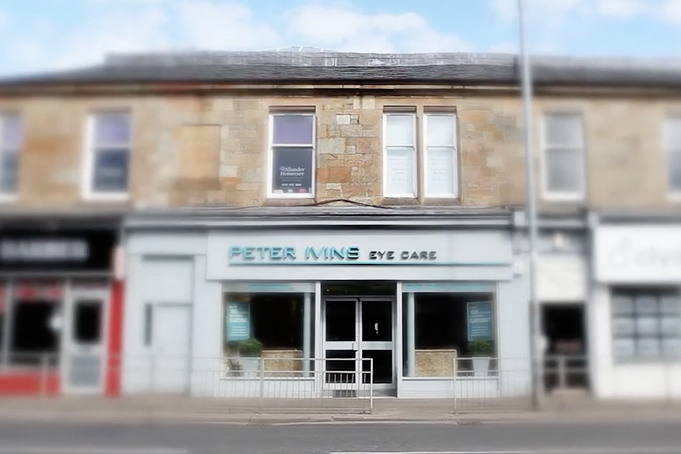
- Bus routes 15, 17, 60, N60, X10 stop within 50 yards
- Opposite Bearsden Train Station
- Free on‑site private parking
Opening Times
| Monday | – |
| Tuesday | – |
| Wednesday | – |
| Thursday | – |
| Friday | – |
| Saturday | – |
| Sunday | Closed |
About Peter Ivins Eye Care
Award‑winning, independent, and recognised for clinical leadership
Peter Ivins Eye Care is known for specialist eye care and for leading the way in myopia management in Scotland—combining evidence‑based treatments with advanced measurement and long‑term tracking.
A track record of “firsts” in Scotland
- Scotland’s first dedicated Myopia Management Clinic (launched 2013).
- Scotland’s first practice to install the Oculus Myopia Master (April 2021) to measure and track axial length (eye length) in children.
- Scotlands first practice to offer SightGlass Vision DOT Spectacle lenses.
A clinic built around measurement + progress tracking
Scotland’s first practice to introduce Ocumetra mEYE® Suite is used to measure axial length and repeat measurements over time—helping assess risk, monitor progression, and evaluate whether a treatment approach is working as intended.
What to bring


Have an Enquiry about Myopia Treatment?
Contact form



Craig is widely recognised within the UK optometry community for his work in myopia management and professional education. He was invited to contribute to Optometry Today’s multi‑part guide to myopia control alongside other UK experts.

Frequently ask questions
What is myopia (short‑sightedness)?
Myopia is a condition where distant objects look blurry while close objects remain clear. It happens because light focuses in front of the retina—often due to the eye growing too long. In children, myopia frequently progresses as they grow.
What is “progressive myopia”?
Progressive myopia means a child’s shortsightedness worsens over time—often year after year. This can increase the likelihood of higher myopia later in life, which is associated with greater long term eye health risks.
What is myopia management?
What treatments do you offer for myopia management?
We offer a full range of evidence based options including soft myopia control contact lenses, orthokeratology (OrthoK night lenses), and myopia management spectacle lenses. This allows us to choose the best option based on age, prescription, lifestyle, and likely compliance.
What is axial length and why does it matter?
Do you measure axial length at your clinic?
Yes. In April 2021, Peter Ivins Eye Care installed Scotland’s first Oculus Myopia Master, enabling axial length measurement and ongoing tracking as part of myopia screening and management.
At what age can children wear myopia‑control contact lenses?
This depends on maturity and handling, but some myopia control soft lenses are designed for children from around 5 years old (age at initiation varies by product and clinician judgement). We assess readiness during the myopia exam and provide training.
What is Ortho‑K
Is Ortho‑K reversible?
How often will my child need reviews?
Regular follow-ups are important to monitor eye health, vision, and progression trends (often including axial length tracking). Your clinician will set an interval tailored to treatment type and progression risk.
How do you choose the best myopia treatment?
The best treatment is the one a child will wear consistently with good comfort and clear vision. Professional discussions about myopia management emphasise choosing options that support compliance and quality of life—because outcomes depend on real world wear.